Air Purifier Specs, Decoded: CADR, HEPA H13 vs H14 and Room Size
How CADR is rated, H13 vs H14 HEPA, 'covers 460 sq ft' and filter life: what an air purifier's box really tells you, and how to size one for your room.
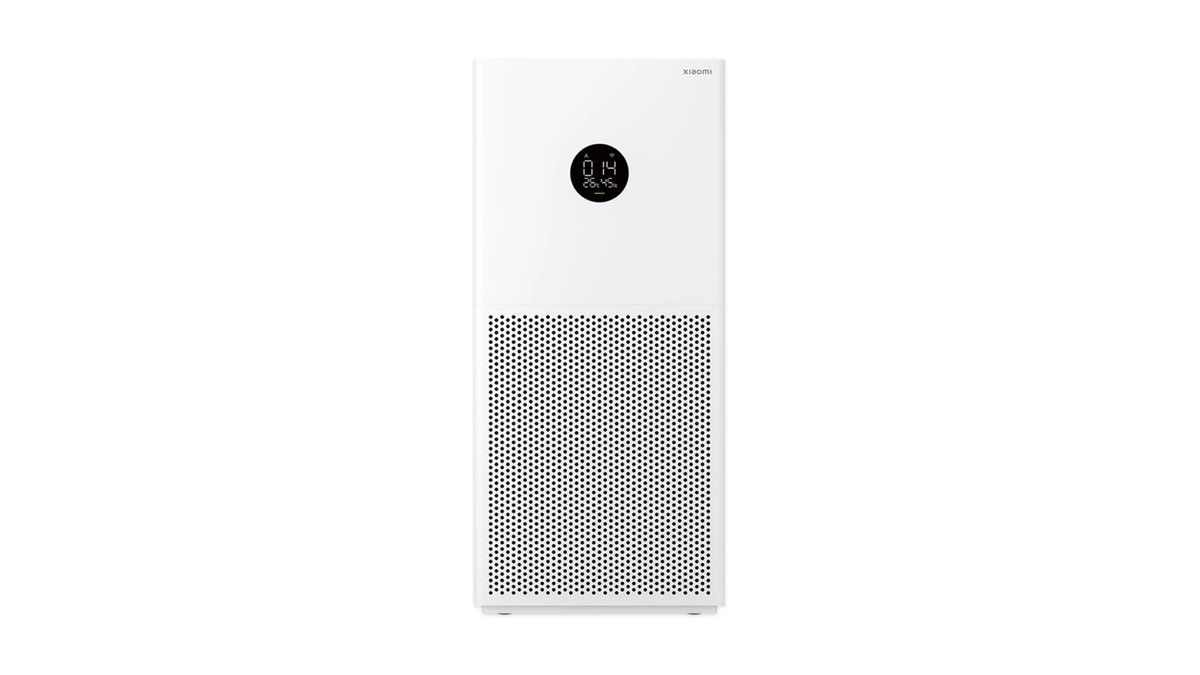
Photo: Xiaomi
Basgo saysMatch CADR to your sq ft. Ask how CADR was rated.
Delhi’s air turned “poor” for the first time this season on 21 October, with an AQI of about 245, and the first stage of the city’s pollution action plan (GRAP Stage I) kicked in. Every year, Indian searches for air purifiers peak between late October and mid-November. The boxes are full of numbers: CADR 360 m³/h, True HEPA H13, covers 460 sq ft, 99.97%. Here’s what each one means, and how to size a purifier for your room.
CADR: the one number to compare
CADR (Clean Air Delivery Rate) is how much clean air a purifier delivers per hour. It’s measured by releasing smoke, dust or pollen into a sealed test chamber and timing how fast the purifier clears it. A higher CADR cleans a room faster.
Three things to know:
- Units: Indian listings quote m³/h; American ones quote CFM. 1 CFM is about 1.7 m³/h.
- It’s measured in a sealed lab room. In real homes, studies have measured about 66–90% of the rated CADR, less in leaky rooms. Buy a little more than you need.
- CADR isn’t everything. It says nothing about noise, power use or ozone. But compared on the same test, it’s the best number you have.
How CADR is rated, and why two “360”s aren’t the same
A CADR figure is only as good as the test behind it, and the box rarely says which one:
- Which test. US brands use the AHAM test, which gives three separate CADRs: for smoke (the finest particles), dust and pollen. AHAM also publishes a directory of independently verified ratings. China’s standard, GB/T 18801, gives one particle CADR plus a separate formaldehyde CADR. Xiaomi’s figures follow it: the Mijia 6 lists 443 m³/h for particles and 218 m³/h for formaldehyde.
- Which pollutant. For PM2.5 smog, the figure that matters is the smoke CADR (AHAM) or the particle CADR (GB/T 18801).
- Which speed. In the AHAM test, CADR is measured on the highest speed. The quiet night setting delivers much less.
- Which figure. Most Indian listings print one number in m³/h without naming the test or the pollutant; even Philips India’s own page gives “CADR 250 m³/h” with neither. Some models carry different figures on different listings: we found Honeywell’s Air Touch V2 at 250 or 320 m³/h, and Qubo’s Q500 at 350, 360 or 380.
What to do: prefer a purifier that names its test and pollutant, compare CADRs from the same test where you can, and when a model’s figures disagree, size your room by the lower one.
How much CADR your room needs
A good target is five air changes an hour, which is what the American appliance makers’ (AHAM) rule of thumb works out to. For a room with a 10 ft ceiling, common in Indian homes, that means:
| Room | Floor area | CADR needed |
|---|---|---|
| Small bedroom, 10×10 ft | 100 sq ft | about 140 m³/h |
| Bedroom, 10×12 ft | 120 sq ft | about 170 m³/h |
| Master bedroom, 12×14 ft | 168 sq ft | about 240 m³/h |
| Living room, 15×20 ft | 300 sq ft | about 420 m³/h |
Shortcut: with a 10 ft ceiling, multiply the floor area in sq ft by 1.4 to get the CADR you need in m³/h. In a smoggy north Indian winter, buy a size up, so you can run the purifier on a quieter speed and still keep up.
How to read “covers 460 sq ft”
Room-size claims are each brand’s own maths, and the brands don’t agree:
- Xiaomi Smart Air Purifier 4 Lite: claims 269–463 sq ft from a CADR of 360 m³/h. That’s exactly a Chinese standard’s formula. At the top figure, in a 10 ft room, the air gets cleaned about 2.8 times an hour.
- Dyson HushJet Compact: claims up to 1,076 sq ft from 250 m³/h, about one air change an hour.
- Philips AC0920: its own page says “recommended” up to 30 m² and, elsewhere, a “max” of 65 m².
The fewer air changes a brand assumes, the bigger the room it can claim. So treat the sq ft claim as a starting point and check it against the CADR maths above. Where a brand gives a range, like Xiaomi’s 269–463 sq ft, the smaller number is the one for a smoggy winter.
HEPA grades: H13 vs H14
HEPA filters are graded under a European standard, EN 1822, by how much they catch at the particle size that’s hardest to trap:
| Grade | Catches at least |
|---|---|
| E11 | 95% |
| E12 | 99.5% |
| H13 | 99.95% |
| H14 | 99.995% |
So an H13 lets through 5 particles in 10,000; an H14, 5 in 100,000. Both are excellent. In your room, what matters more is the CADR and whether the filter seals tightly in its frame.
Watch the wording, too:
- “True HEPA” is an American definition: 99.97% of particles at 0.3 microns.
- “HEPA-type” or “HEPA-like” has no fixed meaning.
- Many Indian listings don’t state a grade at all. Philips India, for one, calls its filter “HEPA NanoProtect” and quotes “99.97% down to 0.003 µm” without giving a class.
The other layers in the box
- Pre-filter: catches hair and large dust and protects the HEPA layer. Vacuum or wash it as the manual says.
- Activated carbon: absorbs smells and some gases. It’s not what removes PM2.5.
- Ionizer, “plasma”, negative ions: charge particles so they stick to filters and surfaces. Some produce ozone as a by-product. The WHO’s India advisory says to avoid purifiers that work by generating ozone.
- UV-C: the US EPA says home UV units have limited effect and should be used with a filter, not instead of one.
Filter life in a north Indian winter
Filter life is quoted in hours or months, and both assume cleaner air than Delhi’s in November. Running round the clock, a purifier logs about 720 hours a month:
- A filter rated 3,000 hours lasts about four months of non-stop use.
- One rated 9,000 hours lasts about a year.
- Heavy smog fills it faster, so trust the filter indicator.
Replacement filters cost roughly ₹1,500–₹2,000 for many compact models and about ₹5,300 for Philips’ large AC4221. Check the filter price before you buy the purifier.
“99.99%” and other claims
A filter’s “99.97%” or “99.99%” is its result in a lab test, in one pass. It doesn’t mean your room’s air becomes 99.99% clean. India’s consumer regulator, the CCPA, has flagged unbacked claims like “kills 99.99% germs” as misleading, and in October 2024 the Consumer Affairs Minister criticised purifier makers over false claims. Treat any percentage without a named test as marketing.
Standards and tax
- BIS standard: IS 17531:2021 covers portable indoor air purifiers. We couldn’t confirm that it’s mandatory.
- No BEE star label for air purifiers.
- GST is still 18%. The Delhi High Court asked the GST Council to consider cutting it in December 2025, but in October 2026 the GST fitment committee reportedly recommended no change.
Checklist before you buy
- Particle (or smoke) CADR in m³/h, with the test named, at least 1.4 × your floor area in sq ft for a 10 ft ceiling.
- A stated HEPA grade, H13 or better.
- Replacement filter price and availability.
- Noise (dB) at the speed you’ll use at night.
- No ozone: skip ozone generators, and switch ionizers off if you can.
- A PM2.5 sensor is handy for auto mode but not essential.
Honest verdict
Start from your room’s square feet, then check the CADR, and how it was rated. Work out what your room needs (floor area × 1.4 for a 10 ft ceiling), add a margin for leaky windows, and pick an H13 purifier whose filters you can afford to replace. Our air purifiers by budget compares current models on clean air per rupee, and do air purifiers really work? covers what the studies found.
Questions people ask
What CADR do I need for a bedroom?
For a 10×12 ft bedroom with a 10 ft ceiling, about 170 m³/h of CADR cleans the air five times an hour, the level the US appliance makers' (AHAM) rule of thumb works out to. A 12×14 ft room needs about 240 m³/h and a 15×20 ft living room about 420 m³/h. As a shortcut for 10 ft ceilings, multiply the floor area in sq ft by 1.4.
Why can two purifiers with the same CADR clean differently?
Because CADR isn't rated one way. US brands use the AHAM test, which gives separate figures for smoke, dust and pollen; Xiaomi's figures follow China's GB/T 18801 test, which rates particles and formaldehyde separately. Most Indian listings print one number in m³/h without naming the test or the pollutant, and some models carry different figures on different listings. The AHAM figure is also measured at top speed, so the quiet night setting delivers far less. Prefer a purifier that names its test and pollutant.
Is H14 better than H13?
On paper, yes: H13 stops at least 99.95% of particles at the hardest-to-catch size and H14 at least 99.995%. In a room, it matters more how much air the purifier moves (its CADR) and how well the filter is sealed, because air that leaks around the filter isn't cleaned at all. An H13 purifier with a higher CADR will usually clean a room faster than an H14 with a lower one.
Why do brands claim such different room sizes?
There's no single formula. Brands assume different numbers of air changes per hour, often one to five, and different ceiling heights. Dyson claims up to 1,076 sq ft for its HushJet Compact from a CADR of 250 m³/h, about one air change an hour, while Xiaomi's 4 Lite claims 269–463 sq ft from 360 m³/h using a Chinese standard's formula. Start from your room's sq ft and check the CADR covers it: with a 10 ft ceiling, multiply the floor area by 1.4 to get the CADR you need.
How often should I change an air purifier filter?
Follow the filter indicator, but expect it sooner in a north Indian winter. Running round the clock, a purifier logs about 720 hours a month, so a filter rated for 3,000 hours lasts about four months and one rated for 9,000 hours about a year. Heavier pollution clogs filters faster. Check the replacement price before you buy: it ranges from about ₹1,500 to over ₹5,000.
Are ionizers and UV purifiers safe?
The WHO's India advisory on air pollution says to avoid air purifiers that work by generating ozone, which irritates the lungs, and ionizers can produce some ozone as a by-product. The US EPA says home UV units have limited effect and should be used with filtration, not instead of it. Choose a purifier that relies on a HEPA filter, and switch off any ionizer if you can.
Is there an Indian standard or star label for air purifiers?
BIS has a performance standard for portable indoor air purifiers, IS 17531:2021, but we couldn't confirm that it's mandatory, and there's no BEE star label for purifiers. GST stays at 18%: in October 2026 the GST fitment committee was reported to have recommended no cut.