Silicon-Carbon Batteries, Decoded: Why Phones Now Have 10,000mAh
Redmi, vivo, OPPO and realme now fit 8,000–10,000mAh into slim phones. What a silicon-carbon battery is, the catch, and how to read mAh, Wh and charging watts.
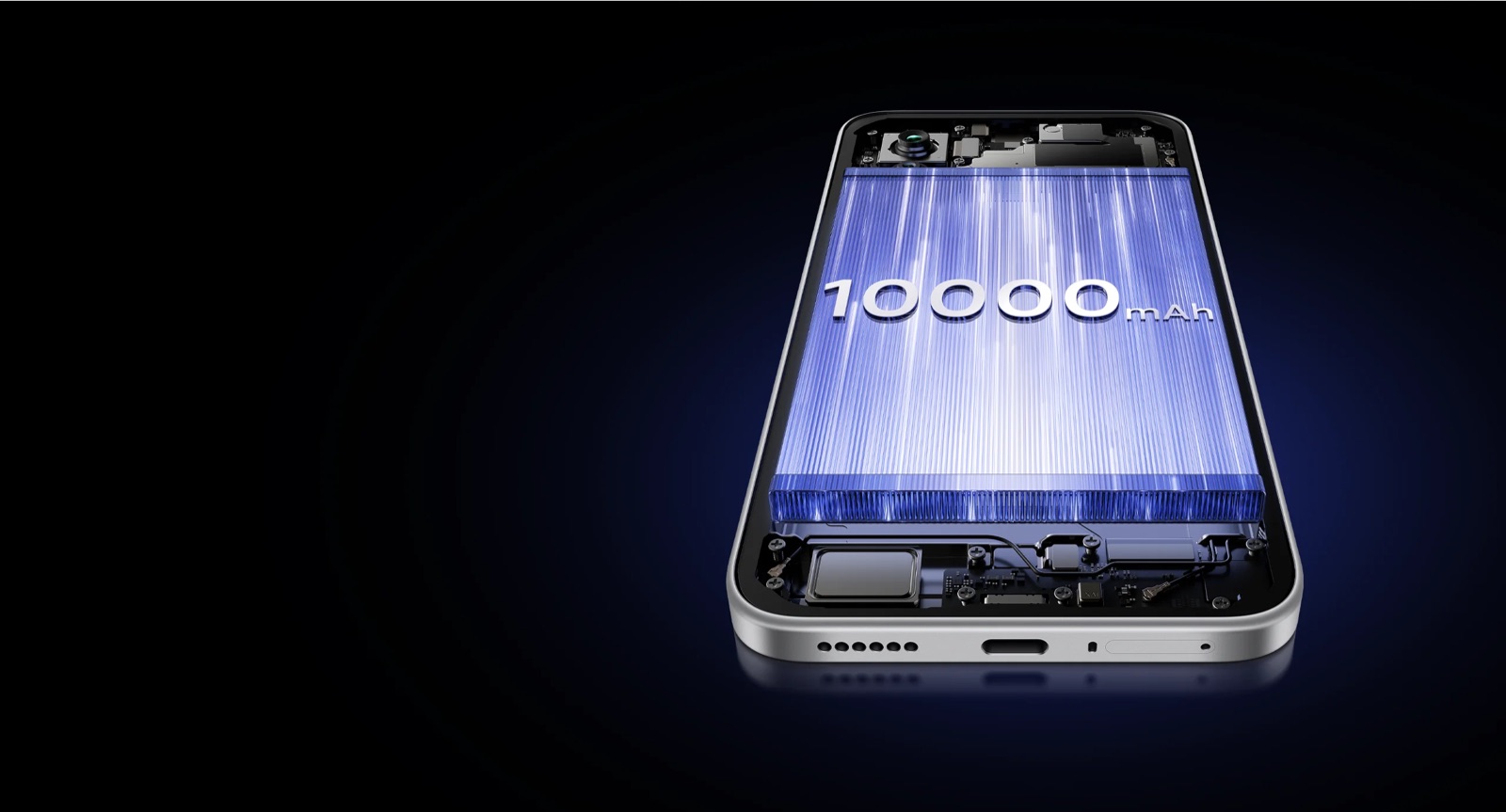
Image: Xiaomi
Basgo says2-day phones are real. Check the charging watts.
Two years ago, a 5,000mAh battery was the headline spec of a big-battery phone. This festive season, phones costing ₹40,000–55,000 ship with 8,000 to 10,000mAh, and some are no thicker than before. The reason is two words you’ll see in brochures all season: silicon-carbon. Here’s what it means, and what to check before you pick one.
“Silicon-carbon”, decoded
Every phone battery is lithium-ion. Inside, lithium moves between two sides: when you charge, it’s stored in the anode. For decades that anode has been graphite. Silicon can hold far more lithium than graphite, about ten times as much by OPPO’s description, so mixing silicon into the anode lets the same-sized battery store much more charge.
That’s all “silicon-carbon” means: a lithium-ion battery whose anode is part silicon. It isn’t a new kind of battery, and it doesn’t charge differently.
The phones that have them
| Phone | Battery | Charging | Starts at |
|---|---|---|---|
| Redmi Note 17 Pro Max (Sep 2026) | 10,000mAh, silicon-carbon | 100W | ₹49,999 |
| realme P4 Power | 10,001mAh, silicon-carbon | 80W | ₹29,999 |
| vivo S2 FE (Oct 2026) | 10,000mAh typical / 9,800mAh rated | 44W | ₹38,999 |
| OPPO F35 Pro (Oct 2026) | 8,000mAh | 80W | ₹45,999 |
| vivo V80 (Oct 2026) | 7,200mAh typical / 7,015mAh rated | 90W | ₹62,999 |
| OPPO Find X10 (Oct 2026) | 8,000mAh | 80W wired, 50W wireless | ₹1,39,999 |
Not every maker names the chemistry. realme and Xiaomi do. vivo’s spec page just says “Li-ion” for the S2 FE, though it’s widely reported as silicon-carbon. The big-name flagships stay near 5,000mAh: about 4,900–5,100mAh on the Galaxy S26 FE and Pixel 11 range.
Reviewers bear the numbers out. The S2 FE lasted beyond two days of heavy use in one review, and the Redmi ran 24 hours in a standard battery benchmark.
The catch
- Silicon swells. As it soaks up lithium, silicon expands far more than graphite. That’s why makers mix in only a fraction of silicon (Xiaomi quotes 16% for one of its phones) rather than going all-silicon.
- Long-term ageing is still unproven. Makers quote lab cycle figures, such as vivo’s at least 80% capacity after 1,400 cycles and OPPO’s 1,800. These batteries are new, so there’s no years-long real-world record yet.
- Big batteries charge slowly unless the watts are high. The S2 FE’s 44W takes over an hour from 20% to 80%. A 100W phone fills the same tank in a fraction of that.
- Weight: a 10,000mAh phone weighs around 225 g, well above a slim 190 g phone.
How to read a battery spec sheet
- Typical vs rated capacity: “typical” is the average the maker measured, “rated” the guaranteed minimum. Brochures quote typical; the box often prints rated.
- mAh vs Wh: mAh ignores voltage, while Wh (watt-hours) is the fairer comparison. OPPO lists its Find X10 Pro Max at 29.76Wh, for example.
- Charging watts are a maximum, usually only with the charger in the box. Check the box actually includes one.
- Reverse charging: the phone tops up earbuds or another phone, like a power bank.
- Bypass charging: while you game plugged in, the charger powers the phone directly instead of cycling the battery, which means less heat and less wear.
- IP68 vs IP69: IP68 survives being submerged. IP69 also survives hot, high-pressure water jets. Several of these phones claim both.
Why your iPhone doesn’t have 10,000mAh
Partly design (thinner, lighter flagships) and partly rules. In the US, a single battery cell above 20Wh counts as dangerous goods for shipping, which nudges global brands to cap batteries or split them into two cells. Some brands sell India-only versions with bigger batteries than they ship elsewhere.
Honest verdict
Silicon-carbon batteries are real progress, not marketing: two-day phones are now a mid-range thing. Before you buy one, check the charging watts (a huge battery on slow charging is a long wait), the weight, and treat the cycle-life numbers as lab claims. If you want flagship cameras and software, you’ll still get about 5,000mAh for now. If battery life is what you care about, this is the best time yet to buy. For why all these phones also cost more this year, see why phones cost more this Diwali.
Questions people ask
What is a silicon-carbon battery?
It's still a lithium-ion battery. The difference is the anode, the side that stores lithium while charged: makers mix silicon into the usual graphite. Silicon holds far more lithium, so the same-sized battery stores more charge. That's how ₹40,000–55,000 phones now fit 8,000–10,000mAh without becoming bricks.
Are silicon-carbon batteries safe?
Phones that use them pass the same safety tests as any other. The known engineering challenge is that silicon swells as it charges, which makers control by limiting how much silicon they use. What's less known is how they age over several years, because these batteries are new in phones.
Does a 10,000mAh phone take longer to charge?
It can, unless the charging is fast. vivo's S2 FE (44W) takes over an hour to go from 20% to 80%, while Redmi's Note 17 Pro Max supports 100W. Check the charging watts, and remember the top figure needs the charger in the box.
Which phones in India have silicon-carbon batteries?
Redmi Note 17 Pro Max (10,000mAh) and realme P4 Power (10,001mAh, which realme says uses a third-generation silicon-carbon anode) are clear examples. vivo's S2 FE (10,000mAh) is widely reported as silicon-carbon, though vivo's spec page just says Li-ion. OPPO's 8,000mAh F35 Pro and Find X10 don't name the chemistry.
Why do iPhones, Pixels and Galaxy flagships still have about 5,000mAh?
Partly design choices, and partly rules: in the US a single battery cell above 20Wh counts as dangerous goods for shipping, which pushes global makers to cap or split batteries. Some brands sell India-only versions with bigger batteries than elsewhere.