QLED, QNED, Mini LED, OLED: What Your TV's Label Really Means
QLED, QNED, Mini LED and QD-Mini LED are all LCD TVs with different backlights. What each label means, the numbers that matter more, and 2026 India prices.
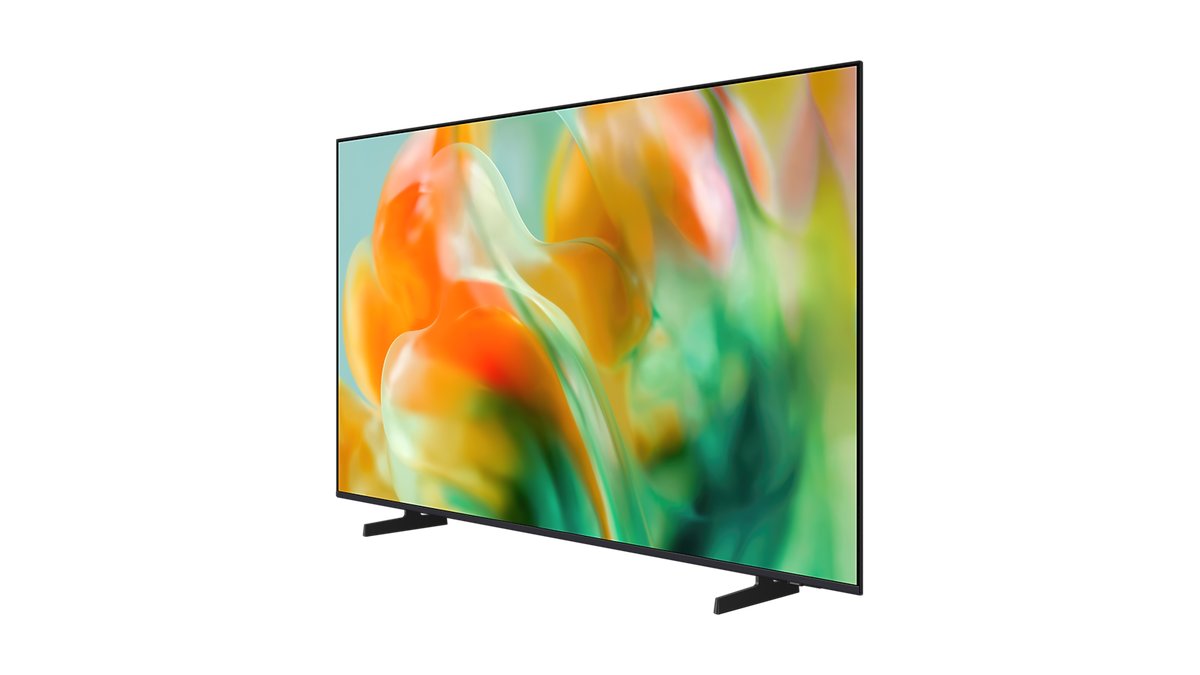
Photo: Samsung
Basgo saysMost labels mean LCD. Check nits, zones, Hz.
Every TV box in 2026 has a badge: QLED, QNED, Mini LED, QD-Mini LED, Neo QLED, OLED. A 32-inch “QLED” sells for ₹7,699 and a 55-inch “QD-Mini LED” for over ₹50,000. Here’s what each label actually describes, and the handful of numbers that tell you far more than any of them.
First: almost every label means LCD
Most TVs, whatever the badge, are LCD panels lit from behind by LEDs. The labels describe either the backlight (how many LEDs, how they dim) or the colour layer (whether there’s a quantum-dot film). Only OLED works differently: there’s no backlight at all.
| Label | What it really describes | Who uses it |
|---|---|---|
| LED / LCD | An LCD lit by LEDs, from the edges or from behind | Everyone |
| QLED | An LCD with a quantum-dot colour film | Samsung, TCL, Hisense, many budget brands |
| QNED | LG’s name for its LCD range | LG |
| Mini LED | An LCD with thousands of tiny LEDs dimmed in zones | Samsung, TCL, LG and others |
| QD-Mini LED / Neo QLED | Mini LED plus quantum dots | TCL, Samsung (Neo QLED) |
| OLED / QD-OLED | No backlight: every pixel lights itself | LG, Samsung, Sony |
“QLED”: colour, not brightness
Quantum dots are tiny particles that turn the backlight into purer reds and greens, so colours can look richer. That’s all the label promises. It says nothing about how bright the TV gets, how deep its blacks are, or even its resolution: the ₹7,699 32-inch “QLED” above is HD Ready (720p).
Nothing sets how much quantum-dot material a “QLED” must contain, and that’s now contested. In 2024, a Korean quantum-dot supplier had three TCL QLED models tested and reported finding none; TCL said the testing was flawed and its films do contain them. In 2025, buyers in the US filed class actions against Hisense and TCL. As of October 2026 we found no ruling, and no test of TVs sold in India.
Even big brands blur the line. Samsung’s 2026 “Mini LED” range, which sits below its Neo QLEDs, is reported to get its colour from a phosphor layer rather than quantum dots, and Samsung’s own page for the M80H doesn’t mention quantum dots at all.
“Mini LED”: the backlight that matters
A normal LCD has dozens of LEDs behind the screen, or a strip along the edges. A Mini LED TV has thousands of much smaller ones, grouped into dimming zones that switch down independently. More zones means darker blacks next to bright objects, and less of the grey “halo” around subtitles on a dark scene.
The number to look for is zones, and not every brand gives it:
- TCL publishes them: up to 512 zones on the P8L, up to 2,176 on the C7L.
- Samsung doesn’t give a zone count for its 2026 Mini LED models.
QD-Mini LED (TCL) and Neo QLED (Samsung) mean a Mini LED backlight plus quantum dots. Still an LCD, just a better-lit one.
“QNED”: LG’s name, not a technology
QNED is LG’s brand for its LCD TVs. It’s been reported that in 2025 LG replaced quantum dots in its QNED range with a different colour layer it calls Dynamic QNED Color, though reports differ on whether that covered every model, and only the top QNEDs were Mini LED. LG’s 2026 QNED evo Mini LED range starts at ₹52,990 and spans 43 to 115 inches. Check each model’s spec sheet for “Mini LED”: the badge alone doesn’t settle it.
“OLED”: no backlight at all
In an OLED, every pixel makes its own light and switches off completely for black. That gives perfect contrast in a dark room, which is why film lovers pay for it. There are two kinds:
- WOLED (LG’s panels): copes better with a bright room.
- QD-OLED (Samsung’s panels): brighter, richer colour, but blacks can look greyish in daylight.
The numbers that matter more than the label
- Resolution. At 43 inches and up, buy 4K. “HD Ready” means 720p.
- Peak brightness, in nits. It varies hugely under one label: TCL lists 450 nits for its T89D QD-Mini LED and claims 3,000 for its C7L. For a sunny room, brighter is better.
- Dimming zones, where the brand publishes them.
- Native refresh rate. Ignore “Motion Rate 120” (Samsung’s doubled figure for a 60Hz panel), “Motion Booster 330Hz” and “288Hz DLG”. For cricket and gaming, look for a native 120Hz or 144Hz panel.
- Colour gamut as a percentage of a named standard, such as DCI-P3. “Over 90% wide colour gamut” with no standard named tells you little.
- HDR formats. Netflix and Prime Video use Dolby Vision for many shows. Samsung TVs support HDR10+ but not Dolby Vision; TCL and LG support Dolby Vision.
MEMC (motion smoothing) inserts frames the TV invents. It can help sports, but it makes films look like soap operas, so turn it off for movies.
What 55 inches costs in 2026
Indicative late-October 2026 prices, as listed by retailers and price trackers. They move daily in the festive sales, so check on the day.
| TV (55-inch) | Type | Price |
|---|---|---|
| Samsung M2EH | Mini LED | about ₹48,490 on Amazon (launched at ₹44,990) |
| TCL P8L | QD-Mini LED, 512 zones, native 144Hz | about ₹52,640 on Flipkart |
| LG QNED evo Mini LED | Mini LED | range from ₹52,990 (at 43 inches) |
| Samsung M80H | Mini LED, 144Hz | ₹67,990 on Samsung.com |
| Samsung S85H | OLED | ₹1,19,990 on Samsung.com; less with some sellers |
| LG C6 | OLED, native 120Hz | about ₹1,28,990 on Amazon |
GST and 2026 prices
On 22 September 2025, GST on TVs larger than 32 inches fell from 28% to 18%; 32-inch and smaller sets were already at 18%. Then 2026 pushed prices back up: costlier memory chips and a weaker rupee drove hikes from the start of the year, and entry-level 32-inch TVs were reported to be up about 14–15% by mid-year. Our phone prices guide explains the memory crunch behind it.
Which label for which room
- Under ₹25,000 (32–43 inches): ignore the QLED badge. Check resolution (Full HD at 32 inches, 4K at 43), brightness and the smart platform.
- ₹45,000–₹70,000 (55 inches): this is where Mini LED arrives, and it’s a real step up. Choose on zones, nits, native refresh rate and Dolby Vision, not on the badge.
- About ₹1 lakh and up: OLED for dark-room films; a bright Mini LED for a sunny living room.
- Size: for a 55-inch, sit about 5.5–7.5 feet away; for a 65-inch, about 6.5–9 feet.
Honest verdict
The label tells you which family a TV belongs to, and that’s mostly LCD. It doesn’t tell you how good the picture is. Brightness, dimming zones, native refresh rate and Dolby Vision do. At 55 inches, a well-specified Mini LED is the best value in 2026. Under ₹25,000, buy on resolution and brightness and treat “QLED” as decoration.
Questions people ask
Is a QLED TV better than an ordinary LED TV?
Not automatically. A QLED is an LED-lit LCD with a quantum-dot film that can widen its colours, but the badge says nothing about brightness, contrast or even resolution: a 32-inch 'QLED' selling for ₹7,699 on Amazon in October 2026 is only HD Ready (720p). Compare resolution, brightness and refresh rate, not the badge.
What is the difference between QLED and Mini LED?
QLED describes the colour layer; Mini LED describes the backlight. A Mini LED TV has many more, much smaller LEDs behind the screen, dimmed in zones, so blacks get deeper and highlights brighter. Many Mini LED TVs also have quantum dots, sold as QD-Mini LED or, by Samsung, Neo QLED.
Is OLED better than Mini LED?
In a dark room, OLED wins: each pixel lights itself, so black is truly black. Mini LED gets brighter, which suits sunny living rooms, and costs far less. In late October 2026, 55-inch Mini LED TVs started at about ₹48,000, while 55-inch OLEDs ran from under ₹1 lakh with some sellers to about ₹1.3 lakh.
Do cheap QLED TVs really have quantum dots?
It's disputed. In 2024, tests commissioned by a quantum-dot supplier reported no quantum-dot materials in three TCL QLED models, which TCL denied. In 2025, US buyers filed class actions against Hisense and TCL; we found no ruling as of October 2026, and no test of TVs sold in India. Treat the badge as a claim and check colour gamut and brightness instead.
Did GST on TVs come down?
Yes. From 22 September 2025, TVs larger than 32 inches moved from 28% to 18% GST; smaller sets were already at 18%. But 2026 brought price rises from costlier memory chips and a weaker rupee, with entry-level 32-inch TVs reported up about 14–15%.
What size TV should I buy for my room?
Using a common viewing-angle method, a 43-inch suits about 4.5–6 feet, a 55-inch about 5.5–7.5 feet and a 65-inch about 6.5–9 feet. If you sit around 8 feet away, 55 to 65 inches is the sweet spot.